
Arrest History in Stonewall County
The Stonewall County Sheriff's Office makes county arrests, handles warrants, and is the verified local jail and booking contact. Texas DPS Highway Patrol officers and Texas Rangers can create state reports. Texas Parks and Wildlife game wardens may also make an arrest within their authority. No separate Aspermont police department or active constable records unit was verified from official sources. That means the badge, agency name, and report number on the arrest papers are key to finding the investigative file.
An arrest history can span several records. The arresting agency writes the offense and arrest report. Jail intake creates the booking sheet, custody log, photograph, fingerprints, property record, and release or transfer entry. A magistrate adds warnings, probable-cause, and bond records. If prosecutors file a charge, the clerk creates a court case. DPS later receives reported fingerprint-supported arrest and disposition data. Stonewall County publishes no online archive date, so historical scope must be confirmed by phone or written request.
This split is most important when records seem to disagree. A booked charge reflects intake. The prosecutor may file a different charge or no charge at all. A jail status changes when a person posts bond, receives credit, is transferred, or is released under an order. The clerk's judgment supplies the court result. Keep the record date and creating agency beside each fact so an old booking entry is not mistaken for a current custody status.
The sheriff contact also serves rural areas outside Aspermont, while a state officer may create a separate file along the county's main highways. Stonewall County's small scale does not merge those files. The arresting agency owns its report, the jail owns its intake record, and the court owns its filed case. That simple map prevents most dead ends.
Stonewall County Sheriff Arrest Check
Call 940-989-3333 for the fastest recent-custody check. Ask whether the person was booked, released, transferred, or never brought into Stonewall County custody. If staff can confirm the record, note the booking number, booking date, booked charge, bond, arresting agency, court, current facility, and release or transfer status. A call is good for triage, but a written booking record is better when exact dates and fields matter.
Stonewall County Sheriff
P.O. Box 388
Aspermont, TX 79502
940-989-3333
Fax: 940-989-3334
Email: jailadmin@stonewallcountytx.org
The official county page does not give a physical records counter, separate records hours, dedicated inmate line, or visitation details. Call before traveling. Confirm whether the published email is the designated Texas Public Information Act address before relying on email delivery.
The Stonewall County sheriff page provides the official arrest and jail contact.
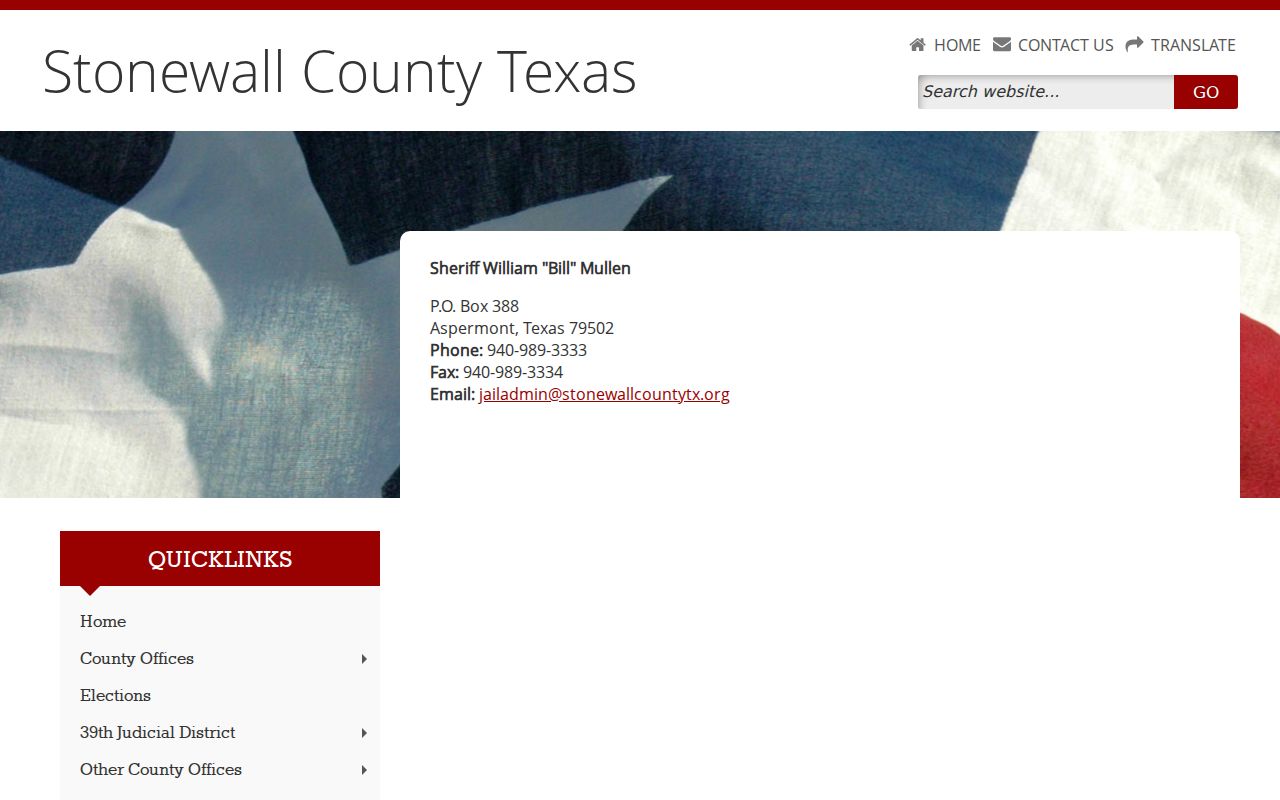
The source confirms the direct fallback needed because no public Stonewall County booking portal was verified.
For a phone inquiry, begin with the person's full legal name and approximate arrest or booking date. Ask what identifier staff needs to avoid a false match. Do not assume the sheriff owns every report. If a trooper, Ranger, or game warden made the arrest, the sheriff may hold only the booking record while the state agency holds the narrative and evidence-related pages. Request each record from its source.
A person may also be housed outside the county under an interlocal arrangement. No receiving facility is named in official Stonewall County sources. Ask for the present facility and transfer status instead of guessing at a neighboring jail. The same call can confirm whether a local property-release or records-counter process exists, because neither is published online.
The county also publishes no separate sheriff records hours or turnaround promise. If the need is urgent, say which existing record is sought and ask for the accepted request channel. A verbal answer can settle where a person is held. A dated written response is better for checking a booking number, bond entry, or release date later.
How to Look Up Stonewall County Arrests
A complete Stonewall County arrest lookup follows the record from custody to the agency report and then to any filed case. It also accounts for transfer. No one portal covers those stages. Use a full legal name and date of birth if the agency asks, but avoid sending sensitive identifiers through ordinary email unless staff gives a secure route.
- Call the sheriff at 940-989-3333 and ask about local booking, release, transfer, bond, and the arresting agency.
- Request the arrest report from the agency that created it. A DPS or TPWD report does not become a sheriff record merely because the person was booked locally.
- Contact the combined District/County Clerk at 940-989-2272 for filed charges, bond orders, settings, disposition, and judgment.
- For self-review, use the Texas Department of Public Safety fingerprint process. The public DPS name product is narrower and shows reported convictions and deferred adjudications, not every arrest.
- Send a date-bounded Public Information Act request for the booking sheet, jail log, and basic arrest information when the phone check is not enough.
- Use VINELink for participating custody notifications, TDCJ after state transfer, and the BOP locator for federal custody.
A Stonewall County booking can lead to the criminal court case record once prosecutors file a charge. Match the cause number and final disposition rather than stopping at the jail allegation.
For a statewide self-review, DPS fingerprint matching is stronger than a public name search because it ties the record to prints rather than similar names. The public Texas Criminal History Conviction Name Search reports received convictions and deferred adjudications. It is not a complete public list of all arrests. A no-result can reflect scope, spelling, identity, or reporting issues, so it cannot replace the local agency and court checks.
DPS records depend on reports from criminal-justice agencies. A disposition can lag or be missing. When a Stonewall County arrest appears without its outcome, obtain the court judgment and follow the DPS correction route for one's own record. The public name product and a fingerprint-based personal review answer different questions, so their results should not be described as interchangeable.
Request Stonewall County Booking Records
Stonewall County does not publish a sheriff request form, fee schedule, or processing-time promise. Write a narrow request for an existing document rather than asking staff to answer questions or create a report. Identify the record type, incident or booking date, approximate time, location, arresting agency, and report, case, or booking number if known. Ask for electronic delivery and an itemized estimate when available. Request segregable public parts if protected fields must be withheld.
The Texas Public Information Act, Government Code Chapter 552, is the formal fallback. Law-enforcement material may be withheld when release would interfere with an investigation or prosecution, and other laws protect juvenile, victim, medical, biometric, driver's-license, Social Security, and similar data. Section 552.108(c) treats basic information about an arrested person, arrest, or crime differently from the full investigative file.
Texas Attorney General guidance explains how the public can make an information request.

The state guidance supports a focused written request when Stonewall County arrest records are not posted online.
Available delivery channels are phone triage, email, fax, mail, and a confirmed in-person counter. The sheriff publishes jailadmin@stonewallcountytx.org, fax 940-989-3334, and P.O. Box 388, Aspermont, TX 79502. Keep a fax confirmation or use trackable mail if timing matters. For an in-person request, call first because the physical counter and its hours are not posted.
Useful request fields include requester contact details, record type, date range, incident identifiers, subject identifiers that the office asks for, delivery format, and a cost ceiling. Ask for PDF, audio, video, inspection, paper, or certified copies as the record permits. State that public portions should be produced if another part is withheld. If the office denies access, ask for the statutory exception and any Attorney General ruling or previous determination on which it relies.
Texas state cost rules may allow charges for copies, labor, programming, media, or unusually large work. Stonewall County posts no local arrest-record fee table. Ask for an estimate before work passes a chosen cost ceiling. A tight date range and known report or booking number can reduce search time without narrowing away the event that matters.
Note: No Stonewall County source requires notarization, a fixed fee, or a ten-day production period for these sheriff records.
What an Arrest Record Shows
A Stonewall County arrest record identifies a custody event at a point in time. The arrest report can show the date, time, location, warrant or warrantless basis, agency, officer or report number, alleged offense, and public probable-cause facts. The booking entry adds intake and custody details. Some identifiers and sensitive fields will be removed from a public copy. The eventual court result is not inherent in the initial arrest record and must be checked separately.
| Booking Number | Connects the intake event to jail records and later custody questions. |
|---|---|
| Booking Date & Time | Shows when jail intake occurred, which may differ from the arrest time. |
| Arresting Agency | Identifies which office holds the arrest or investigative report. |
| Charges | Lists allegations recorded at booking, which prosecutors may reject or change. |
| Bond | May show amount, type, conditions, court, and later bond action. |
| Booking Photograph | No county release policy or fee is posted; request it under the PIA and expect lawful redactions or exceptions. |
| Release Status | Can show release method, release date, hold, or transfer destination when public. |
Additional fields may include the arrest type, officer or report number, probable-cause affidavit when public, property inventory, holds or warrants, magistrate, magistration date, and assigned cause number. A public copy can omit or mask protected personal data. The absence of a booking photograph from a released record does not make the remaining booking entry incomplete if the photograph is lawfully withheld.
Texas law generally requires an arrested person to be taken before a magistrate without unnecessary delay and within 48 hours. The magistrate gives warnings, addresses counsel and probable cause, and handles bail as authorized. That event is called magistration. It comes after intake and before the final prosecution, so its charge and bond information may later change through court action.
Release can follow a cash bond, surety bond, personal bond, dismissal, sentence credit, or another court order. A hold can block release even when one bond is satisfied. Ask for the bond type, amount, conditions, court, and any listed hold, then verify later action with the issuing court. Jail staff can report custody, but only the docket and signed orders show the judicial trail.
Stonewall County Arrest Agency Split
Highway geography can split one Stonewall County arrest across agencies. A DPS trooper may create the report after a stop on U.S. 83 or U.S. 380, while the sheriff creates the local booking entry. A game warden record remains with TPWD. The combined clerk then holds the prosecution only if a charge is filed in a Stonewall County court. Ask each office for the document it created.
| Record | Best Route | What It Answers |
|---|---|---|
| Sheriff arrest or booking | Stonewall County Sheriff | Local custody, booking, bond, release, or transfer. |
| Trooper or Ranger report | Texas DPS public-information channel | State officer's report and public investigative material. |
| Game warden report | TPWD public-information channel | Game or environmental enforcement report. |
| Filed criminal case | Combined District/County Clerk | Filed charge, docket, judgment, and sentence. |
No verified Aspermont police records unit exists. Do not send a city event to an invented police portal. Confirm the agency from the paperwork or call the sheriff.
The TPWD game warden contact identified in the research uses 325-669-0172, while records still route through the TPWD public-information channel. DPS reports route through the DPS Public Information Office or its official request system. Active major-crime files can be withheld when release would interfere with the investigation or prosecution. In each case, ask for public and segregable parts rather than assuming the whole Stonewall County arrest report is open or closed.
Recent Arrests and Booking Logs
No official Stonewall County daily arrest log, recent-arrests page, booking blotter, public jail roster, most-wanted list, or sheriff app was verified. That absence changes the search method. Call the sheriff for current custody and submit a written request for a date-bounded jail log or booking sheet. Avoid unofficial lists, which may omit a release, transfer, corrected charge, or later court outcome.
A missing web result proves little. A person might have been released, moved to another facility, booked by another agency, or never held in the Stonewall County jail. The sheriff publishes no app-only roster, warrant tool, or alerts. For a historical Stonewall County arrest, start with a defined date range and reconcile the response against the clerk's final disposition and, for one's own identity record, a fingerprint review.
Booking photographs are government records subject to the Texas Public Information Act and other applicable exceptions, but Stonewall County publishes no specific release rule or charge. Request the official record only when it serves a lawful need. This page republishes no arrestee names or photographs. An official log, if one becomes available, should still be read as a custody snapshot rather than a gallery or a list of proven offenders.
Warrants require a separate sweep because the county posts no active-warrant database. Call the sheriff, contact the combined clerk for warrants tied to district or county cases, and ask the Justice Court about fine-only or bench matters. An active municipal court may hold city matters. Texas has no general public statewide warrant search, and restricted law-enforcement systems are not public substitutes.
A bench warrant or capias can arise from a missed setting or other court directive. A capias pro fine follows a post-judgment fine or cost issue and brings ability-to-pay safeguards into play. Search warrants may stay sealed during an investigation. For one's own possible warrant, identify the issuing court, cause number, bond terms, and approved resolution path before appearing or sending funds.
Stonewall County Arrest Transfer Check
If a person is no longer in local custody, ask whether the change was a release or a transfer. Record the destination, transfer date, booking number, and receiving agency when staff can release them. No official Stonewall County source names a standing contract facility, so an unofficial jail directory is not a safe shortcut. Call the confirmed receiving office before sending mail, funds, or a visitor.
Next, match the custody move to the case stage. A transfer to TDCJ generally follows a state sentence, while a move between local facilities may occur before trial. Federal custody uses a separate system. VINELink may send status notices where coverage is available, but a notice does not carry the full arrest report or judgment. The Stonewall County clerk remains the source for the filed charge and court outcome.
Stonewall County Custody Boundaries
County jail, state prison, and federal custody searches cover different systems. After sentence and transfer, use the TDCJ Online Inmate Search. It accepts a first and last name, TDCJ number, or SID number, with optional gender and race filters. A profile may show the current unit, sentence details, county of conviction, and projected release information. It does not provide the full Stonewall County booking sheet or court docket.
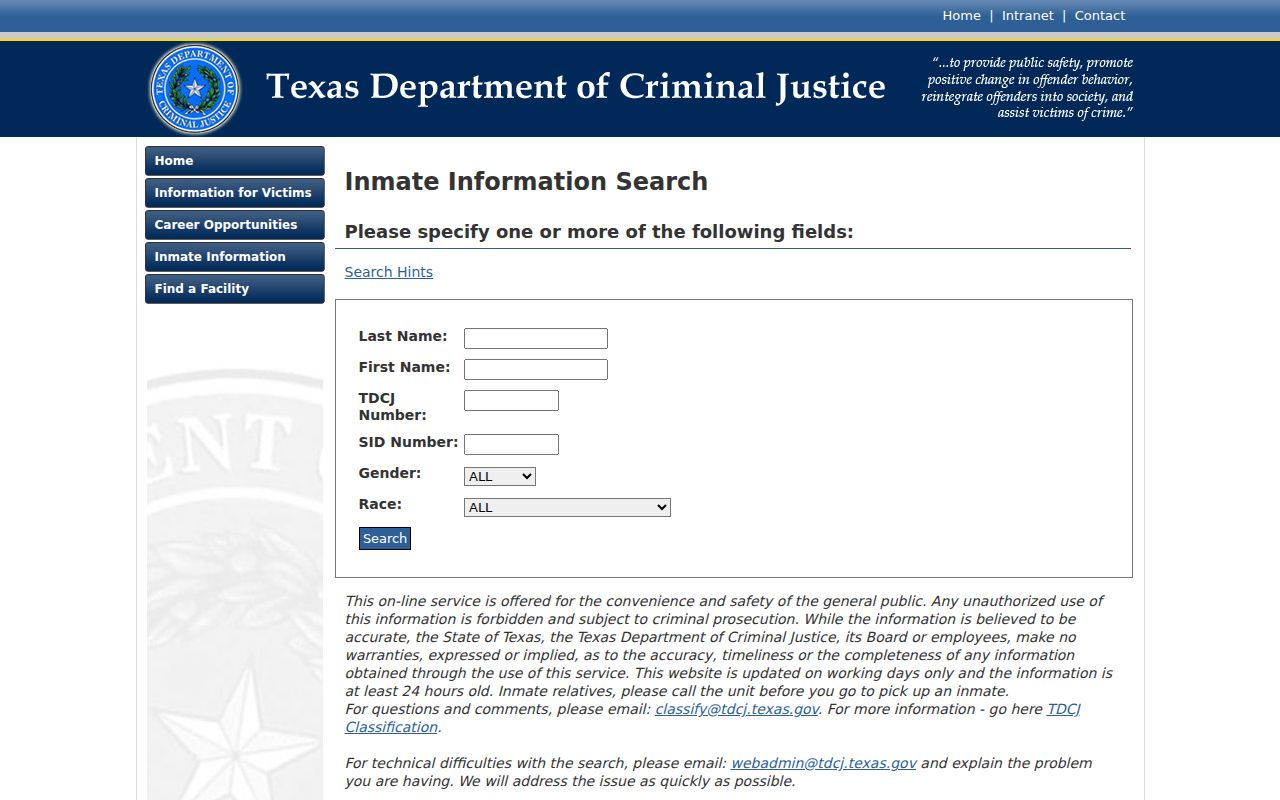
The locator image shows why a state-prison search belongs after, not in place of, the local arrest check.
Texas VINELink can provide available custody notifications, though participation and timing must be checked.

Notification status can change with custody, but it does not establish guilt or replace the filed Stonewall County case.
Federal custody is separate. Use the Federal Bureau of Prisons inmate locator for a federal prisoner.
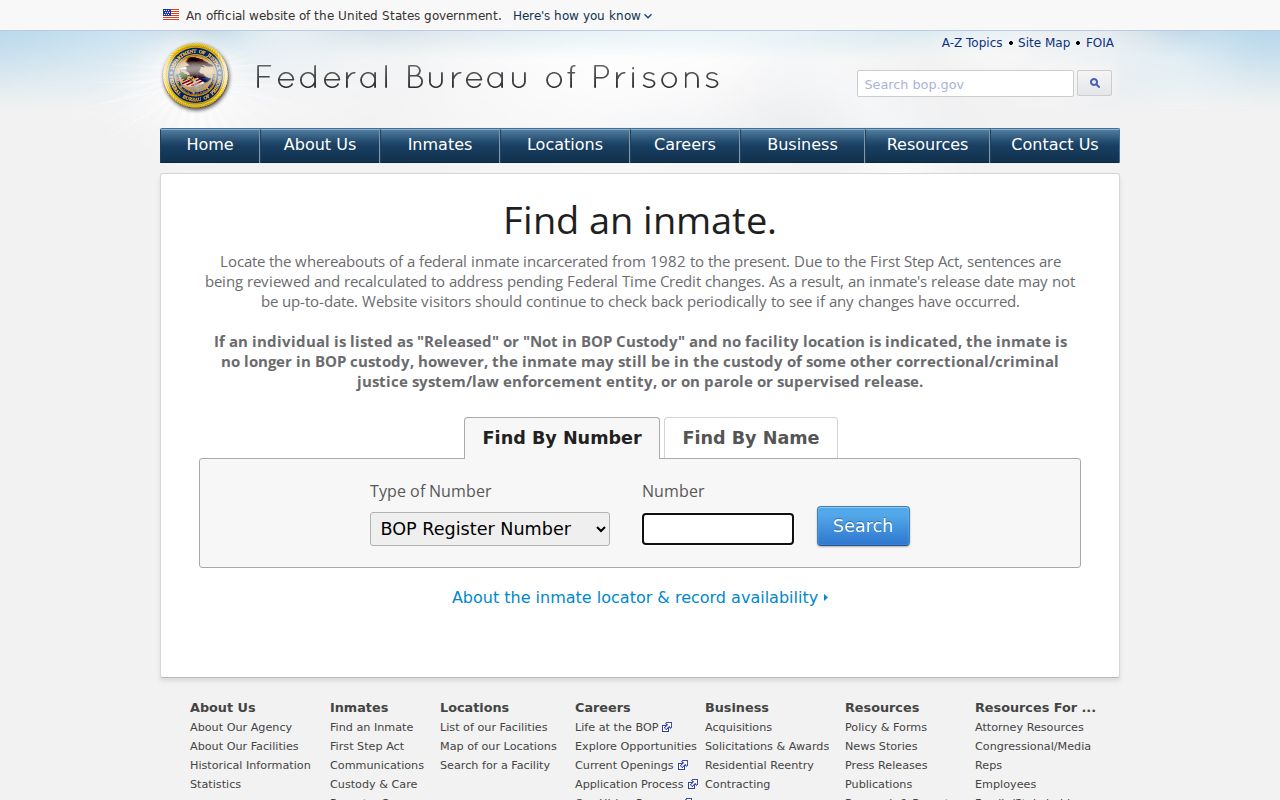
The federal locator confirms another boundary: it cannot answer a current Stonewall County jail or booking question.
A transfer is not a release. If the sheriff says a person left local custody, ask for the destination, transfer date, and booking number. Then use the receiving system. TDCJ results can show a county of conviction and sentence information, while VINELink focuses on custody status and notices where coverage exists. Neither tool carries the sheriff's full offense narrative, property record, or all bond documents.
Stonewall County sources do not publish a visitation schedule, mail format, commissary provider, money-deposit channel, phone vendor, or government-ID rule. Ask the sheriff for the current facility first, then obtain that facility's direct instructions. Naming a vendor or nearby jail without confirmation would risk sending funds, mail, or a visitor to the wrong place.
For TDCJ, search by the TDCJ number or SID number when known because those identifiers narrow the result more reliably than a common name. The profile may list the current unit, offense, offense date, county of conviction, sentence date, and sentence length. Those fields reflect state custody and sentence reporting, not every part of the Stonewall County arrest history.
Arrests vs Convictions
A Stonewall County arrest entry shows that an agency took a person into custody and recorded allegations. A conviction requires a court judgment of guilt. Between those points, a prosecutor can reject, replace, reduce, or enhance the booked allegation. A case may end in dismissal or acquittal. Deferred adjudication has its own legal effect and should be read from the judgment, not guessed from the booking line.
| Arrest Record | Conviction Record |
|---|---|
| Created by the arresting agency and jail | Created by the court after prosecution |
| Shows an arrest and booking event | Shows a judicial finding of guilt |
| Held by the agency and Stonewall County sheriff | Held by the clerk and reported through state systems |
| May be followed by release, no filing, or dismissal | May be followed by sentence, appeal, expunction, or nondisclosure when legally eligible |
A dismissal does not automatically delete the agency report, booking photograph, clerk index, or reported DPS arrest cycle. Texas Chapter 55A expunction is the stronger removal process for eligible arrest outcomes. An order of nondisclosure usually limits ordinary public access but retains listed government access. The remedy depends on the offense, outcome, and current law. Do not infer removal from a verbal statement or one missing portal result.
If one's own DPS record lacks a disposition, compare it with the certified or complete Stonewall County judgment. DPS directs correction work toward the agency that submitted the data and its own crime-records process. Keep the cause number, arrest tracking details, and signed final order together. A clean match between those identifiers is more useful than relying on name alone.
Note: An arrest is not proof of guilt, and the Stonewall County court file supplies the filed charge and final outcome.