
How to Check Criminal History in Stonewall County
No single search produces a complete Stonewall County criminal history. Start by deciding whether the question concerns a recent arrest, a filed court case, a statewide public conviction entry, or your own fingerprint-linked history. The combined District and County Clerk is the primary source for felony and county misdemeanor case files. The sheriff is the source for local booking and incident material. Texas DPS supplies the statewide public conviction and deferred-adjudication name product, while fingerprint review gives a person a stronger way to inspect their own reported identity history.
Collect the full legal name, known spelling variants, an approximate event or filing year, and a case or booking number when one is available. A date of birth can help distinguish similar names, but send sensitive identifiers only by a method the official office accepts.
- Ask the combined clerk to check district felony and constitutional county misdemeanor records separately.
- Call the sheriff for recent booking, release, transfer, bond, and arresting-agency details.
- Check the Justice Court or a confirmed municipal court for fine-only cases and related bench matters.
- Use the DPS public name search for reported Texas convictions and deferred adjudications.
- Order the clerk record or complete a fingerprint self-review when identity and disposition must be reconciled.
Stonewall County Clerk Records Hub
Stonewall County concentrates several record routes at the courthouse, 128 Town Square Lane in Aspermont. Combined District and County Clerk Holly McLaury holds the local felony and county misdemeanor files. The clerk can be reached at 940-989-2272, by fax at 940-988-4001, or by mail at Drawer P, Aspermont, TX 79502. Counter hours are Monday through Thursday from 8:00 a.m. to 4:30 p.m. and Friday from 8:00 a.m. to noon. The office closes for lunch from noon to 1:00 p.m.
The official Stonewall County homepage shows the courthouse identity and office network.

The county page confirms that direct local contact, not a broad metropolitan case portal, is the practical starting point. The clerk links an Online Records Search, but research did not verify criminal case coverage. Ask what datasets it contains before treating a no-result as meaningful. For case detail, request the docket, charging instrument, judgment, sentence, and any public register of actions.
Official Texas Background Checks
Texas DPS Crime Records Division offers two products that should not be confused. Its public Criminal History Conviction Name Search reports convictions and deferred adjudications submitted to DPS. It is name based and can return a similar person or miss a record because of spelling, identity, or reporting issues. A Review of Personal Criminal History uses fingerprints through Fingerprint Applicant Services of Texas, known as FAST, and is the stronger official route for examining your own Texas record.
DPS lists a $15 fingerprint record-check fee and a $10 FAST capture fee. The public online name search uses $1 credits. Card purchases add 2.25 percent per credit and a $0.25 transaction fee, and a credit is consumed even when no match is returned. DPS also describes a $10 offline name check. Verify the total during scheduling because authorized fingerprint purposes can carry different charges.
| Official route | Best use | Published base cost |
|---|---|---|
| DPS public name search | Reported convictions and deferred adjudications | $1 online credit |
| DPS offline name check | Offline public name request | $10 |
| DPS fingerprint review | Your own identity-linked Texas history | $15 plus $10 FAST capture |
Stonewall County Conviction Search Fields
The Texas DPS conviction search begins with an account and prepaid search credits.
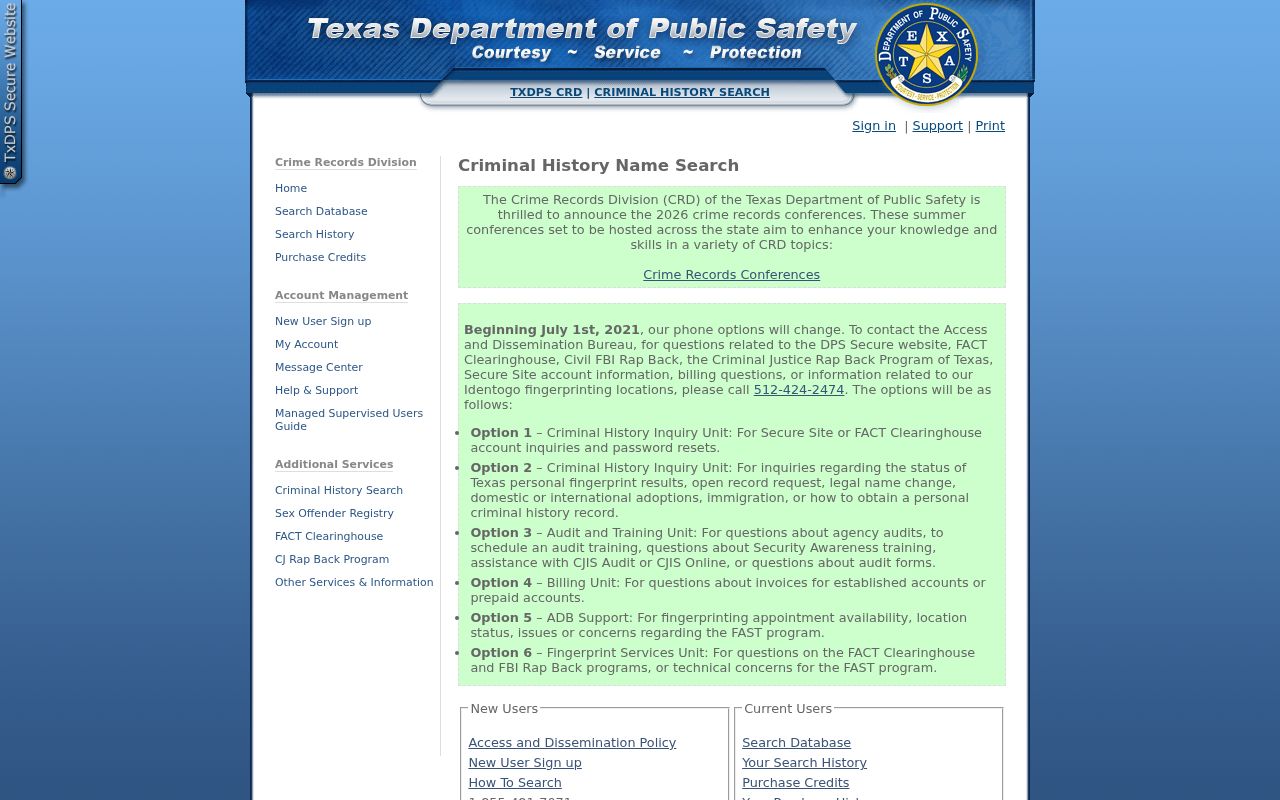
The interface demonstrates why a name result is a lead, not fingerprint proof. Use a middle name and date of birth when known, then compare any candidate carefully with the source court file.
| Field | Use | Required | Practical point |
|---|---|---|---|
| Last name | Text | Yes | Use the legal surname and test known variants. |
| First name | Text | Yes | Similar names can produce several candidates. |
| Middle name | Text | No | Helps narrow common names. |
| Date of birth | Date | No | Improves matching but does not verify fingerprints. |
| Sex and race | Filters | No | Use only as matching aids. |
The DPS search guide explains credits and result handling.

Its guidance reinforces that a paid no-match still consumes a credit and does not clear every county, court, or arrest record.
Types of Criminal Records
Stonewall County agencies create distinct records as a matter moves from report to custody and then to court. An incident report belongs to the agency whose officer wrote it. A sheriff booking entry records intake and custody. The proper clerk file records what charge was filed and how the court resolved it. DPS then keeps reported fingerprint-supported cycles, while its public name product exposes only the allowed conviction and deferred-adjudication slice.
- Arrest and booking records: show the custody event, booked allegation, bond, and release or transfer status.
- Criminal court files: hold complaints, informations or indictments, dockets, orders, judgments, and sentences.
- DPS history records: connect reported Texas events, with public access narrower than subject review.
- Warrant records: originate with a court or magistrate and may not be available while sealed or unexecuted.
- Supervision and registry records: address community supervision, parole, prison custody, or Chapter 62 registration duties.
The DPS Crime Records FAQ lays out the differences among Texas record products.
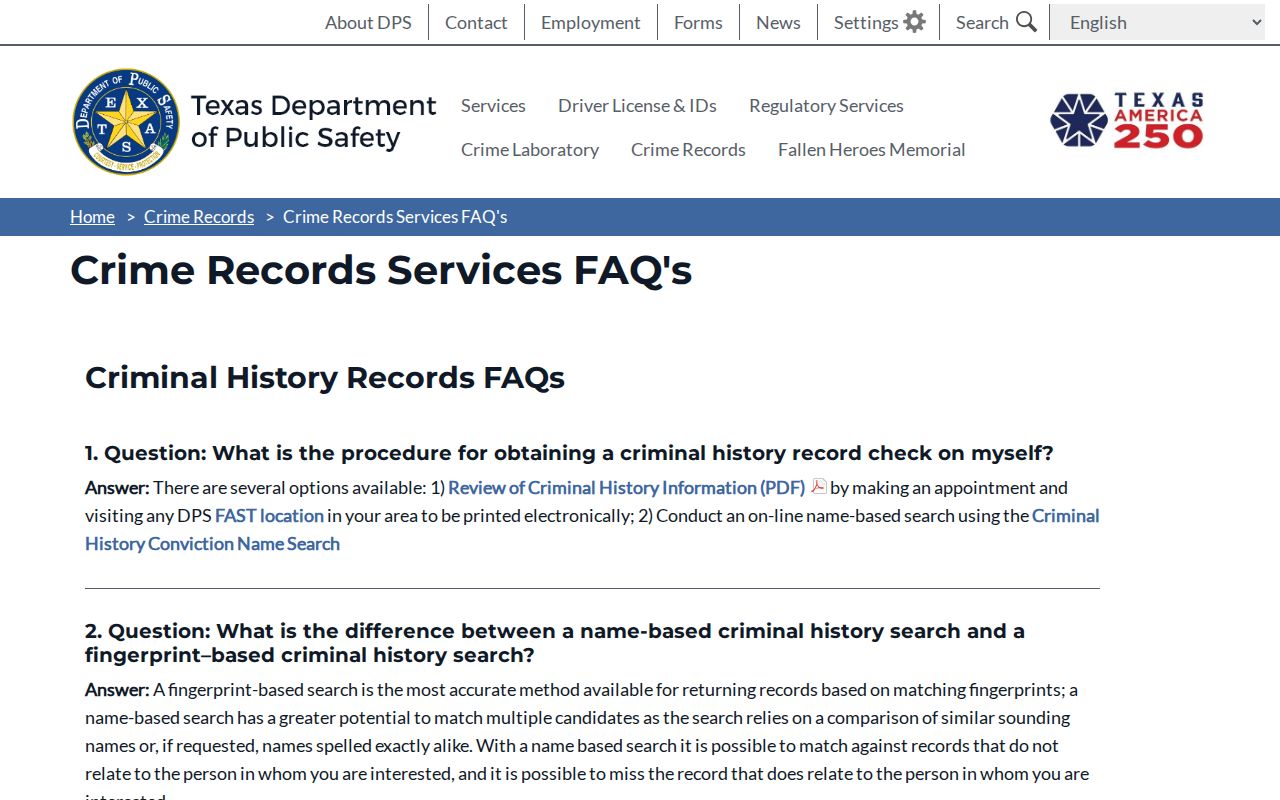
That distinction matters when a clerk disposition and a repository entry do not yet agree.
Stonewall County Record Sources Compared
A booked charge can change after review by the prosecutor or grand jury. A court dismissal can also leave a booking entry or incomplete DPS cycle until the proper correction or legal remedy is complete. Compare the source to the precise question instead of treating any one result as a complete history.
| Source | What it proves | What it does not prove |
|---|---|---|
| Sheriff booking | A custody event and intake details | Guilt or final filed charge |
| Clerk case file | The prosecution, docket, and local outcome | A complete statewide identity history |
| DPS public name result | Reported public convictions and deferred adjudications | A fingerprint-confirmed full record |
Record flow: Incident or arrest report › sheriff booking › prosecutor filing decision › court disposition › agency report to DPS.
What a Stonewall County Criminal Record Shows
The visible fields depend on the record holder. A full Texas criminal-history record may include aliases, date of birth, state and FBI identifiers, arrest charges, reporting agencies, court charge, disposition, and sentence. A clerk file adds pleadings, settings, counsel, motions, judgment, fines, costs, and other public docket events. A booking sheet adds the intake time, facility, bond, holds, and release or transfer information. Protected data can be redacted.
| Name and identifiers | Legal name, aliases, date of birth, and agency identifiers where law permits. |
|---|---|
| Arrest and booking | Date, agency, booking number, booked allegation, bond, custody, and release. |
| Charges and statutes | Complaint, information, or indictment with offense class and legal citation. |
| Disposition | Conviction, acquittal, dismissal, deferred adjudication, or another filed outcome. |
| Sentence | Confinement, jail credit, fine, costs, restitution, or community-supervision order. |
| Custody or supervision | Local detention, TDCJ placement, community supervision, parole, or release data. |
- Disposition
- The recorded outcome of the case.
- Deferred adjudication
- A plea followed by supervision while the court defers a finding of guilt.
- Capias
- A court writ directing that a person be taken into custody.
- Nondisclosure
- A Texas order that limits ordinary public access while preserving access for listed agencies.
Stonewall County Custody After Transfer
Stonewall County publishes no official online jail roster, named detention-facility page, or mobile sheriff app. Call Sheriff William “Bill” Mullen's office at 940-989-3333 and ask whether the person remains in local custody, was released, or moved to another facility. The sheriff contact is P.O. Box 388, Aspermont, TX 79502; fax 940-989-3334; jailadmin@stonewallcountytx.org. Confirm the designated method before relying on email for a formal public-information request.
After a state sentence and transfer, the TDCJ Online Inmate Search is the proper state-prison locator. Texas VINELink can supplement participating custody notifications, while the federal BOP locator is separate. The detailed Stonewall County arrest history route explains how to reconcile the booking, arresting-agency report, and later court file. A disappearance from local custody does not show whether release or transfer occurred.
Public Access Laws
The Texas Public Information Act governs access to executive-agency records, but it does not make every law-enforcement detail public. Active-investigation material and protected identifiers can be withheld or redacted. Basic information about an arrested person, arrest, or crime is treated differently under Government Code Section 552.108(c). Judicial records are requested from the clerk under court-access rules. DPS dissemination is separately limited by Government Code Chapter 411.
Key Texas authorities:
Government Code Chapter 552 gives a route to existing public records while allowing required or lawful redactions.
Government Code Chapter 411 controls criminal-history access, dissemination, and nondisclosure.
Family Code Chapter 58 restricts juvenile law-enforcement records.
Code of Criminal Procedure Chapters 55A and 62 govern expunction and sex-offender registration.
Ask the sheriff for existing, date-bounded records and segregable public portions. Ask the clerk for the filed judicial record. A reason for the request is generally not the point; a precise description of the existing record is.
Stonewall County Warrant Checks
No verified Stonewall County active-warrant database or most-wanted list exists. Check the sheriff at 940-989-3333, then contact the combined clerk for district and county warrants tied to filed cases. Fine-only bench or capias matters may sit with the Justice Court or a confirmed Aspermont municipal court. Texas has no general public statewide warrant lookup, and restricted TCIC or NCIC access is not a public substitute.
If a warrant may concern you, identify the issuing court and cause number. Ask the court about the current bond, appearance, surrender, or payment procedure, and consider legal advice before appearing. Verify any payment demand through an independently obtained official number. A public no-result cannot rule out a sealed, juvenile, new, or lagging warrant entry.
Note: A receipt or signed court order is stronger proof of resolution than absence from an online list Stonewall County does not publish.
Sealed, Expunged & Restricted
Texas expunction under Code of Criminal Procedure Chapter 55A is a narrow statutory remedy that can require destruction, deletion, return, or confidential retention of eligible arrest records. An order of nondisclosure under Government Code Chapter 411 usually blocks ordinary public disclosure but preserves access for agencies listed by law. The remedies are not interchangeable. A dismissal alone does not promise either outcome.
Begin with full identifiers from the Stonewall County clerk and sheriff, then identify every agency that holds the same event. Petition routing and eligibility depend on the arrest, charge, outcome, and current statute. Stonewall County does not publish a total district-court expunction filing fee online, so ask the clerk for a written quote. Juvenile records and protected victim, medical, biometric, driver-license, or Social Security information can also have separate restrictions.
The current Texas expunction law reflects the Chapter 55A recodification that became operative in 2025.
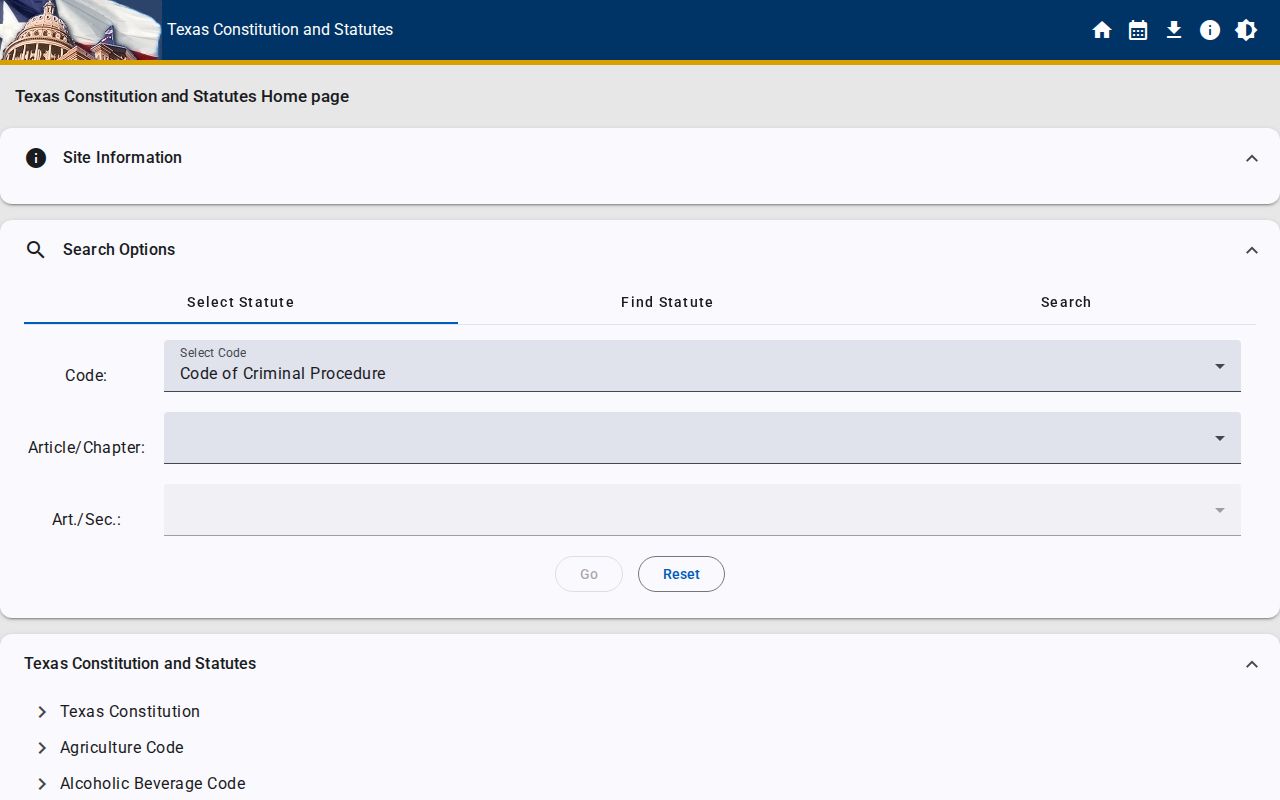
The official text is the right starting point for current numbering, but legal eligibility still turns on the facts of the individual case.
Stonewall County Probation and Parole
Texas calls probation community supervision. For a Stonewall County case, the judgment and current docket show whether the court ordered straight community supervision or deferred adjudication. The 39th Judicial District Community Supervision and Corrections Department serves the district, but the county publishes no separate local CSCD page. Confirm the reporting office through the clerk or court. Officer notes, treatment details, internal risk tools, and some addresses are not assumed public.
Parole works through different agencies. The Texas Board of Pardons and Paroles makes release decisions.

The Board page identifies the decision-making side of parole rather than the local court record.
The TDCJ Parole Division supervises people released on parole.
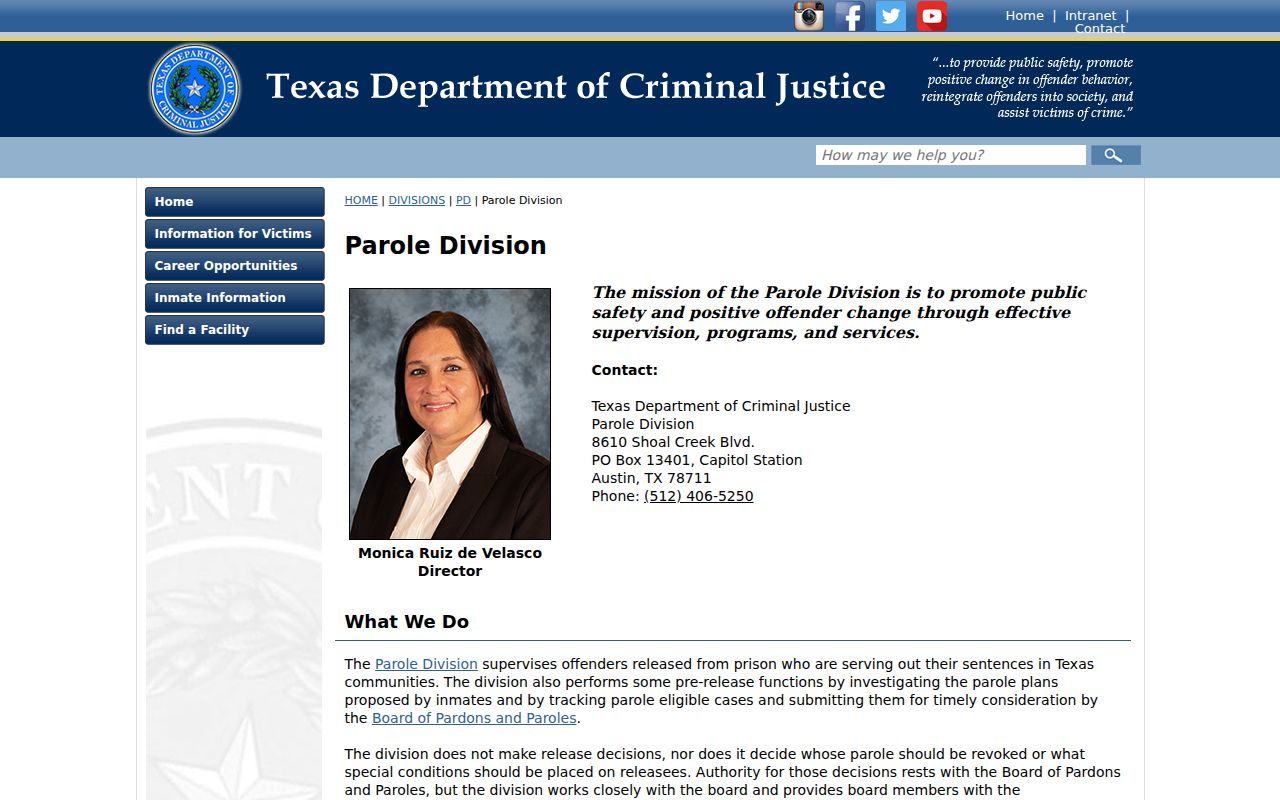
Stonewall County has no verified parole field office, so use the official directory to find the office currently serving the case.
Criminal Records by City in Stonewall County
Aspermont is the only verified incorporated city in Stonewall County, so the local city set contains one page. Old Glory, Peacock, and Swenson are communities and are not used to pad the city list. Aspermont is also the county seat. Its practical routes are the county sheriff for law-enforcement and booking records, the combined clerk for district and county prosecutions, and a verified issuing court for fine-only matters. No standalone Aspermont police records portal or municipal case lookup was confirmed.
Aspermont Criminal History
2020 population 789 · Sheriff and courthouse channels serve the city's verified record routes.
Rayner to Aspermont Record History
Stonewall County was created in 1876 and organized in 1888. Rayner served as the first county seat before Aspermont replaced it in 1898. Modern requests go to the clerk in Aspermont, but historical and genealogy work can point to older Rayner-era material. Researchers should state the likely year and record type, then ask whether a file is electronic, paper, archived, or kept through another official repository.
Noon closures and short Friday hours also matter more than they might in a large county with a twenty-four-hour portal. Direct phone, mail, and counter routes remain central to access. Stonewall County had an estimated 1,186 residents in 2025, and small official crime counts can swing sharply in percentage terms. Use counts with the year and reporting coverage instead of unsupported commercial rate comparisons.
For self-review beyond Texas, the FBI electronic subject-review channel accepts fingerprint-based Identity History Summary requests.

The FBI route is for the subject's own federal history, not a public name search of someone else.
Texas FAST appointments are arranged through the IdentoGO enrollment interface.

No verified FAST site was located inside Stonewall County, so the live locator or the enrollment line should identify the closest current option.